


Tikcotech is best understood as an integrated digital ecosystem: a combination of user-facing products, operational platforms, data services, developer tools, security controls, and partner integrations that work together to support scalable technology delivery. A serious overview of the Tikcotech ecosystem should look beyond individual applications and examine how the platform is structured, how data moves through it, how teams build on it, and how reliability, compliance, and performance are maintained over time.
TLDR: Tikcotech’s ecosystem can be evaluated as a layered technology environment built around application services, cloud infrastructure, data platforms, APIs, security, and operational tooling. Its strongest value comes from the way these components interact to support scalability, integration, and consistent product delivery. A reliable Tikcotech technology stack should emphasize modular architecture, secure data handling, observability, automation, and clear governance. Organizations considering or expanding within the ecosystem should assess both the technical foundation and the operational maturity behind it.
Understanding the Tikcotech Ecosystem
The term Tikcotech ecosystem refers to more than a single product or software platform. It describes the broader environment of technologies, workflows, users, partners, and infrastructure that enable Tikcotech-based services to operate. In practical terms, this includes front-end interfaces, back-end systems, databases, cloud services, analytics pipelines, security frameworks, integration layers, and management tools.
A mature ecosystem is not defined only by how many features it offers. It is defined by how well those features are connected, governed, monitored, and improved. For Tikcotech, the most important question is whether the technology stack supports stable growth: more users, more transactions, more integrations, and more data without creating excessive operational risk.

Core Product and Application Layer
At the top of the Tikcotech stack sits the application layer. This is where users, customers, administrators, and partners interact with the ecosystem. Depending on the implementation, this may include web dashboards, mobile applications, internal portals, customer management tools, reporting interfaces, and self-service environments.
A serious application layer should be designed around usability, performance, accessibility, and security. Modern users expect fast page loads, consistent navigation, clear workflows, and reliable availability. From an engineering perspective, front-end applications are commonly built using component-based frameworks that allow teams to reuse interface elements, standardize design patterns, and deploy new features efficiently.
Equally important is the separation between presentation and business logic. A well-designed Tikcotech application should not place critical rules directly in the interface. Instead, the front end should communicate with back-end services through controlled APIs. This approach improves maintainability and reduces the risk of inconsistent behavior across web, mobile, and partner channels.
Back-End Services and Business Logic
The back-end layer is the operational core of the Tikcotech technology stack. It handles authentication, permissions, workflows, transactions, data validation, notifications, content processing, account management, and integration with external systems. In well-architected ecosystems, these responsibilities are divided into specialized services rather than concentrated in one large application.
A modular back-end architecture offers several advantages. It allows development teams to update specific services without disrupting the entire platform. It also makes it easier to scale high-demand functions independently. For example, a notification service, payment service, search service, or analytics service may require different performance characteristics and infrastructure resources.
Many modern ecosystems use a microservices or service-oriented approach, though this should be adopted carefully. Microservices can improve flexibility, but they also increase complexity in deployment, monitoring, logging, and incident response. For Tikcotech, the right architecture is not necessarily the most fashionable one; it is the one that supports reliability, clear ownership, and measurable operational efficiency.
API and Integration Framework
APIs are central to the Tikcotech ecosystem because they define how systems communicate. A strong API layer allows internal applications, third-party partners, mobile clients, analytics platforms, and automation tools to exchange data securely and consistently. Without a disciplined API strategy, ecosystems often become fragmented and difficult to govern.
Key API considerations include authentication, versioning, rate limiting, documentation, error handling, and auditability. Public or partner-facing APIs should be especially well controlled, because they extend the platform boundary beyond internal teams. API gateways can help enforce security policies, monitor traffic, manage quotas, and simplify access control.
- REST APIs are commonly used for standard application communication and resource-based operations.
- GraphQL may be useful where clients need flexible data queries and reduced over-fetching.
- Webhooks support event-driven integrations, allowing external systems to respond to changes in near real time.
- Message queues help decouple services and improve resilience during traffic spikes or downstream failures.
Data Architecture and Storage
Data is one of the most valuable assets in any technology ecosystem. For Tikcotech, the data layer should support both operational needs and analytical insight. Operational data includes user accounts, transactions, configurations, activity logs, permissions, and workflow states. Analytical data supports reporting, forecasting, product improvement, compliance review, and strategic decision-making.
A robust Tikcotech data architecture may combine relational databases, document stores, object storage, caching systems, and data warehouses. Each type of storage serves a different purpose. Relational databases provide consistency and structured querying. Document databases support flexible records and rapidly evolving schemas. Object storage is suitable for large files, exports, backups, and media. Caching systems improve speed for frequently accessed data.
Good data architecture must also address data quality. Inaccurate, duplicated, incomplete, or poorly classified data can weaken the entire ecosystem. Tikcotech implementations should include validation rules, data lineage, retention policies, access controls, and regular review processes. For regulated industries, privacy and compliance requirements must be considered from the beginning, not added after deployment.
Cloud Infrastructure and Deployment Model
The infrastructure layer determines how Tikcotech services are hosted, scaled, secured, and maintained. Most modern ecosystems rely on cloud infrastructure because it provides flexible compute capacity, managed databases, global networking, storage services, automation tools, and disaster recovery options. However, the value of the cloud depends on disciplined architecture and cost management.
A credible Tikcotech deployment model should include environment separation for development, testing, staging, and production. It should also use automated provisioning so that infrastructure can be recreated consistently. Infrastructure as code is especially important because it reduces manual configuration errors and improves transparency during audits or incident investigations.
Containers and orchestration platforms can improve portability and scalability. They allow applications to be packaged with their dependencies and deployed consistently across environments. Still, containerization should be supported by strong monitoring, secrets management, network policies, and vulnerability scanning. Cloud maturity is not achieved by simply moving workloads online; it requires operational discipline.
Security, Identity, and Access Management
Security is one of the most important pillars of the Tikcotech ecosystem. A trustworthy platform must protect user data, internal systems, intellectual property, and partner connections. This requires a layered approach that includes identity management, encryption, secure coding, infrastructure protection, monitoring, and incident response planning.
Identity and access management should follow the principle of least privilege. Users, administrators, developers, and service accounts should receive only the permissions needed for their roles. Strong authentication, including multi-factor authentication for sensitive access, should be standard. Session management, password policies, single sign-on, and privileged access controls all contribute to a more secure operating model.
Encryption should be applied both in transit and at rest. Sensitive data should be classified, and access to it should be logged. Security reviews should be integrated into the development process through code scanning, dependency checks, penetration testing, threat modeling, and secure configuration baselines.
Analytics, Monitoring, and Observability
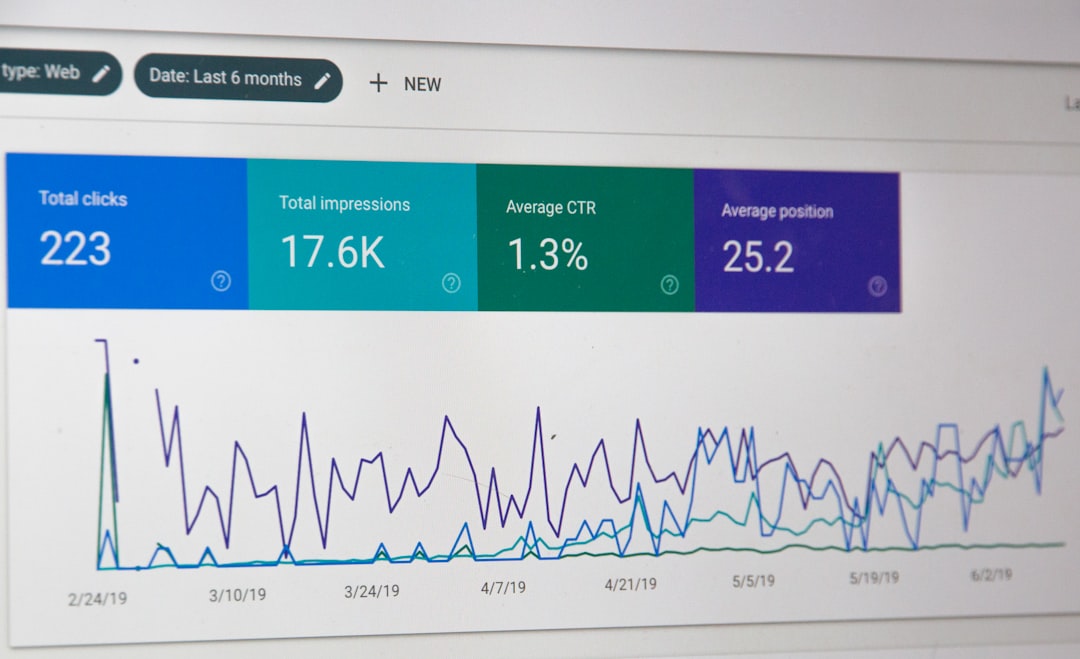
A serious technology ecosystem must be observable. Tikcotech teams need to know not only whether services are running, but also how they are performing and how users are experiencing them. Observability combines logs, metrics, traces, alerts, dashboards, and incident workflows to provide a clear picture of system health.
Operational monitoring should track uptime, response times, error rates, queue depth, database performance, memory usage, CPU utilization, and network behavior. Product analytics should track user journeys, feature adoption, conversion points, engagement patterns, and support trends. Together, these insights help technical and business teams make better decisions.

Alerting should be carefully designed. Too many alerts create fatigue, while too few alerts allow problems to go unnoticed. Effective Tikcotech operations require clear severity levels, on-call responsibilities, escalation paths, and post-incident reviews. The goal is not only to fix issues quickly, but also to learn from them and prevent recurrence.
DevOps, Automation, and Release Management
DevOps practices are essential for maintaining speed without sacrificing stability. In the Tikcotech stack, automation should support code testing, security checks, build creation, deployment, rollback, infrastructure changes, and environment validation. Continuous integration and continuous delivery pipelines reduce manual effort and make releases more predictable.
A mature release process includes automated tests at multiple levels: unit tests, integration tests, API tests, performance tests, and security tests. Feature flags can help teams release functionality gradually and reduce the risk of large, disruptive launches. Rollback procedures should be tested before they are needed in a crisis.
- Continuous integration validates code changes early and frequently.
- Continuous delivery prepares releases in a repeatable and controlled way.
- Automated testing improves confidence and reduces regression risk.
- Change management ensures that business-critical updates are reviewed and traceable.
Partner Ecosystem and Extensibility
The strength of Tikcotech also depends on how easily it can connect with partners, vendors, and complementary systems. Extensibility allows organizations to adapt the ecosystem to specific business requirements without compromising the core platform. This may involve SDKs, API documentation, integration templates, event streams, plug-in frameworks, or certified partner programs.
However, extensibility must be balanced with governance. Uncontrolled integrations can introduce security gaps, inconsistent data, performance problems, and support complexity. A trustworthy ecosystem should maintain clear standards for partner access, data exchange, testing, certification, and ongoing monitoring.
Governance, Compliance, and Operational Maturity
Technology alone does not make an ecosystem reliable. Governance determines how decisions are made, how risks are managed, and how accountability is assigned. Tikcotech stakeholders should define ownership for architecture, security, data, infrastructure, product quality, and vendor relationships.
Compliance requirements vary by industry and region, but common concerns include privacy, data retention, audit logs, consent management, financial controls, and incident notification. These requirements should be embedded into architecture and operations from the start. Retrofitting compliance later is usually more expensive and less effective.
Final Assessment
A strong Tikcotech ecosystem is built on the interaction of many disciplined layers: applications, services, APIs, data platforms, cloud infrastructure, security systems, analytics tools, automation pipelines, and governance practices. The stack should be modular enough to evolve, secure enough to protect sensitive assets, and observable enough to support confident operations.
For organizations assessing Tikcotech, the most important recommendation is to look beyond surface-level features. Evaluate the architecture, integration model, data controls, deployment practices, security posture, and operational processes. A serious technology ecosystem is not measured only by what it can launch today, but by how reliably it can adapt, scale, and remain trustworthy over the long term.