

Few creative industries evolve as rapidly as video games. With every new console generation and technological leap, developers are challenged not only to improve graphics and performance, but to rethink how players engage with worlds, characters, and systems. Two highly anticipated titles—Pokémon Champions and Grand Theft Auto VI—offer fascinating case studies in modern creative game design, even before many players have logged their first hours.
TLDR: Pokémon Champions and GTA VI demonstrate that great game design balances nostalgia with innovation, gives players meaningful agency, and builds systems that encourage long-term engagement. Pokémon shows the power of refining competitive depth and community-driven play, while GTA VI emphasizes immersive worlds and reactive storytelling. Both highlight how constraint, clarity of vision, and player-centric iteration shape unforgettable experiences. Game designers can learn from their contrasting approaches to structure, freedom, and identity.
1. Nostalgia Is a Foundation—Not a Crutch
Both franchises carry enormous legacy weight. Pokémon has decades of creature collecting, competitive battling, and generational fans. Grand Theft Auto has redefined open-world gaming multiple times since the early 2000s. The key lesson? Nostalgia should anchor innovation—not replace it.
Pokémon Champions appears to focus intensely on competitive battling, refining mechanics that hardcore fans care deeply about:
- Balanced stat systems
- Strategic move pools
- Team-building depth
- Online competitive infrastructure
Rather than reinventing the franchise, it distills what players already love and strengthens it.
In contrast, GTA VI builds on its open-world crime saga roots but appears to expand social systems, character relationships, and environmental realism. Rockstar doesn’t abandon its formula; it deepens it.
Lesson for designers: Ask what your core experience truly is. Don’t chase trends at the expense of identity. Enhance the emotional pillars players already associate with your brand.
2. System Depth Creates Longevity
One of Pokémon’s greatest design strengths has always been its hidden complexity. On the surface, it’s accessible and colorful. Beneath that lies a web of stats, abilities, items, EV training, and counters.
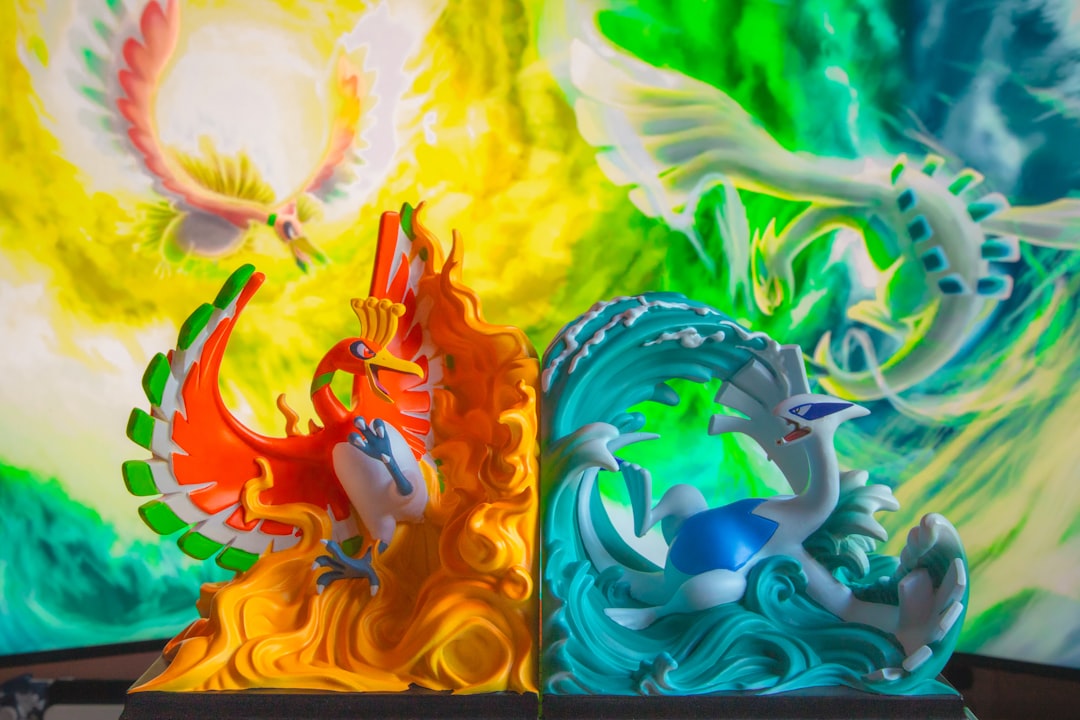
Pokémon Champions seems to lean further into this depth. Competitive players thrive on systems that:
- Reward experimentation
- Encourage metagame shifts
- Create viable multiple strategies
- Evolve with updates
This layered design ensures longevity. When players discover new strategies years after release, you’ve built something resilient.
Meanwhile, GTA VI demonstrates systemic depth on a different scale. Its design likely integrates:
- Dynamic NPC reactions
- Law enforcement escalation systems
- Environmental interactivity
- Character switching and narrative consequences
Instead of turn-based strategy, it uses systemic realism. The principle remains the same: interlocking systems create emergent gameplay.
3. Player Agency Must Feel Authentic
Modern players expect meaningful choices, not cosmetic ones.
Pokémon’s team-building philosophy gives players authorship over their journey. Even within competitive constraints, players can craft wildly different teams. That creativity fuels emotional investment.
In GTA VI, agency might emerge through:
- Branching dialogues
- Heist planning decisions
- Exploration freedom
- Dynamic side missions
The difference is scale. Pokémon grants agency within structured rules. GTA grants agency within spatial freedom. Both approaches succeed because they are internally coherent.
Design takeaway: Agency does not require infinite options. It requires meaningful consequences within clearly defined boundaries.
4. Worldbuilding: Focused Arena vs Living Ecosystem
Creative game design often hinges on how a world is framed.
Pokémon Champions appears structured around battle environments. The “world” is competitive space—clean, mechanical, purposeful. The focus is clarity and fairness.
GTA VI, on the other hand, thrives on density and narrative layering. The city itself becomes a character—alive with traffic patterns, pedestrian routines, media commentary, and hidden environmental storytelling.

Two different philosophies emerge:
- Arena Design: Controlled, balanced, skill-centered.
- Ecosystem Design: Reactive, chaotic, immersive.
Game designers should identify early whether their experience benefits from precision or immersion—and commit fully to that choice.
5. Clarity of Core Loop
The core gameplay loop defines player retention.
For Pokémon, the loop is simple:
- Build team
- Battle opponents
- Refine strategy
- Repeat at higher skill levels
This clarity allows room for mastery.
In GTA VI, the loop is more layered:
- Explore city
- Trigger mission
- Execute objective
- Experience narrative progression
- Unlock new systems
Despite its complexity, Rockstar’s design philosophy usually ensures that players intuitively understand what to do next.
Design insight: Innovation should enhance the loop—not clutter it. If players can’t articulate what they’re doing and why, the design may need refinement.
6. Social Systems Amplify Engagement
Competitive Pokémon thrives because of its community infrastructure. Ranked ladders, tournaments, and online battles transform private gameplay into shared competition.
GTA VI is expected to expand significantly on multiplayer and online components. Rockstar’s previous success with GTA Online demonstrated that:
- Persistent worlds build habit
- Player-created chaos creates stories
- Social play increases long-term revenue
The key lesson is not “add multiplayer.” It’s:
Design systems that encourage players to create stories with and about each other.
7. Balancing Accessibility and Mastery
Both franchises walk a tightrope between new players and veterans.
| Design Dimension | Pokémon Champions | GTA VI |
|---|---|---|
| Entry Barrier | Low surface complexity | Guided mission structure |
| Skill Ceiling | High competitive meta depth | Open-ended problem solving |
| Player Expression | Team composition strategy | Environmental interaction |
| Longevity Driver | Ranked battles and updates | Dynamic world and online play |
Designers should note how both games:
- Teach gradually
- Hide complexity beneath simplicity
- Provide tools that scale with player skill
8. Technology Should Serve Vision
GTA VI’s visual fidelity and environmental detail are likely powered by cutting-edge engine upgrades. Pokémon Champions may leverage improved networking and competitive matchmaking infrastructure.
But in both cases, technology exists to serve design—not replace it.
High-resolution textures alone won’t make an engaging open world. Faster matchmaking alone won’t sustain competitive depth. Vision comes first. Tools follow.
9. Risk Within Boundaries
Creative game design requires risk, but intelligent risk.
Pokémon’s competitive focus can be seen as narrowing scope to deepen experience. GTA VI’s rumored narrative risks—dual protagonists, evolved AI systems—reflect bold but controlled expansion.
The takeaway is clear:
- Don’t change everything at once.
- Expand where your design is strongest.
- Iterate visibly enough that fans feel growth.
10. Emotional Resonance Drives Success
Ultimately, both franchises endure because they evoke emotion.
Pokémon taps into:
- Collection pride
- Strategic triumph
- Personal attachment to teams
GTA taps into:
- Freedom
- Rebellion
- Satirical commentary
- Narrative drama
No amount of mechanical brilliance matters unless players feel something.
Final Thoughts: Two Paths, One Creative Principle
Pokémon Champions demonstrates the power of focus, clarity, and competitive refinement. GTA VI showcases ambition, environmental storytelling, and systemic immersion on a grand scale. One is an arena of precision. The other is a living, breathing world.
Yet both succeed through the same foundational principles:
- Know your core fantasy.
- Build deep, interlocking systems.
- Empower player expression.
- Balance accessibility with mastery.
- Innovate without abandoning identity.
For aspiring designers, the lesson is not to copy either model directly. Instead, analyze why they work. Creative game design thrives at the intersection of structure and surprise, familiarity and reinvention.
As these two titles continue to shape conversations in the industry, they remind us that great games are not just products of technology—but of carefully crafted vision. Whether through a perfectly timed battle move or a chaotic open-world escape, compelling design always delivers something unforgettable: the feeling that the experience was uniquely yours.